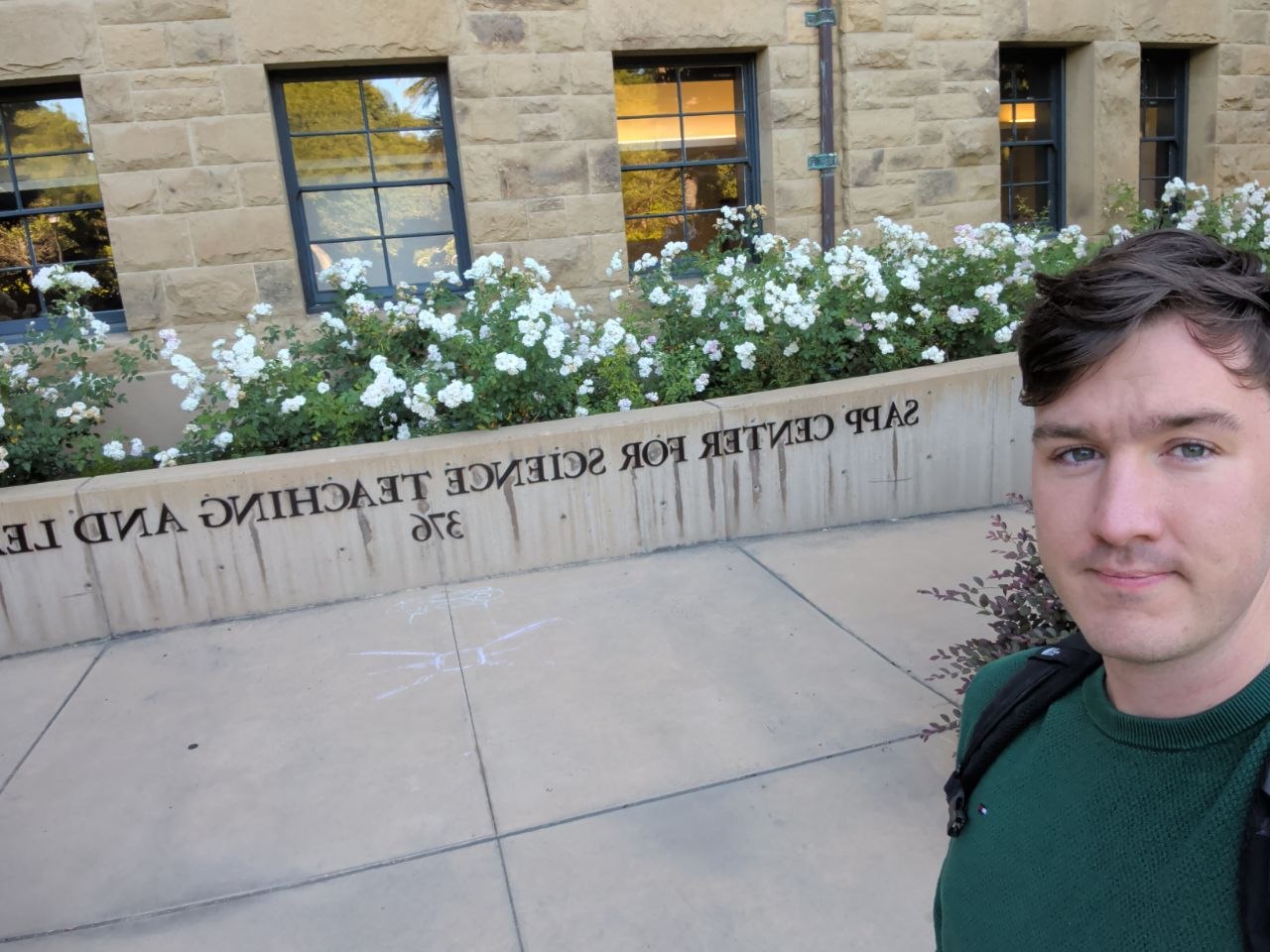
Last Tuesday was the first session of Demystifying AI, Week 01, in the Sapp Center for Science Teaching and Learning — a course I'm taking at Stanford as a registered student. Not sitting in, not auditing: enrolled, doing the readings, in the room every week. And it was one of the more engaging classes I've been in this year.

The Class
The framing was exactly right for the moment: not a hype lecture, not a tools demo, but a serious attempt to take the mystery out of how these systems actually work. Week 01 set the tone — ground the room in fundamentals first, build from there.
The Part That Stuck
The slide that stuck with us wasn't about architecture or benchmarks. It was the reading assignment.
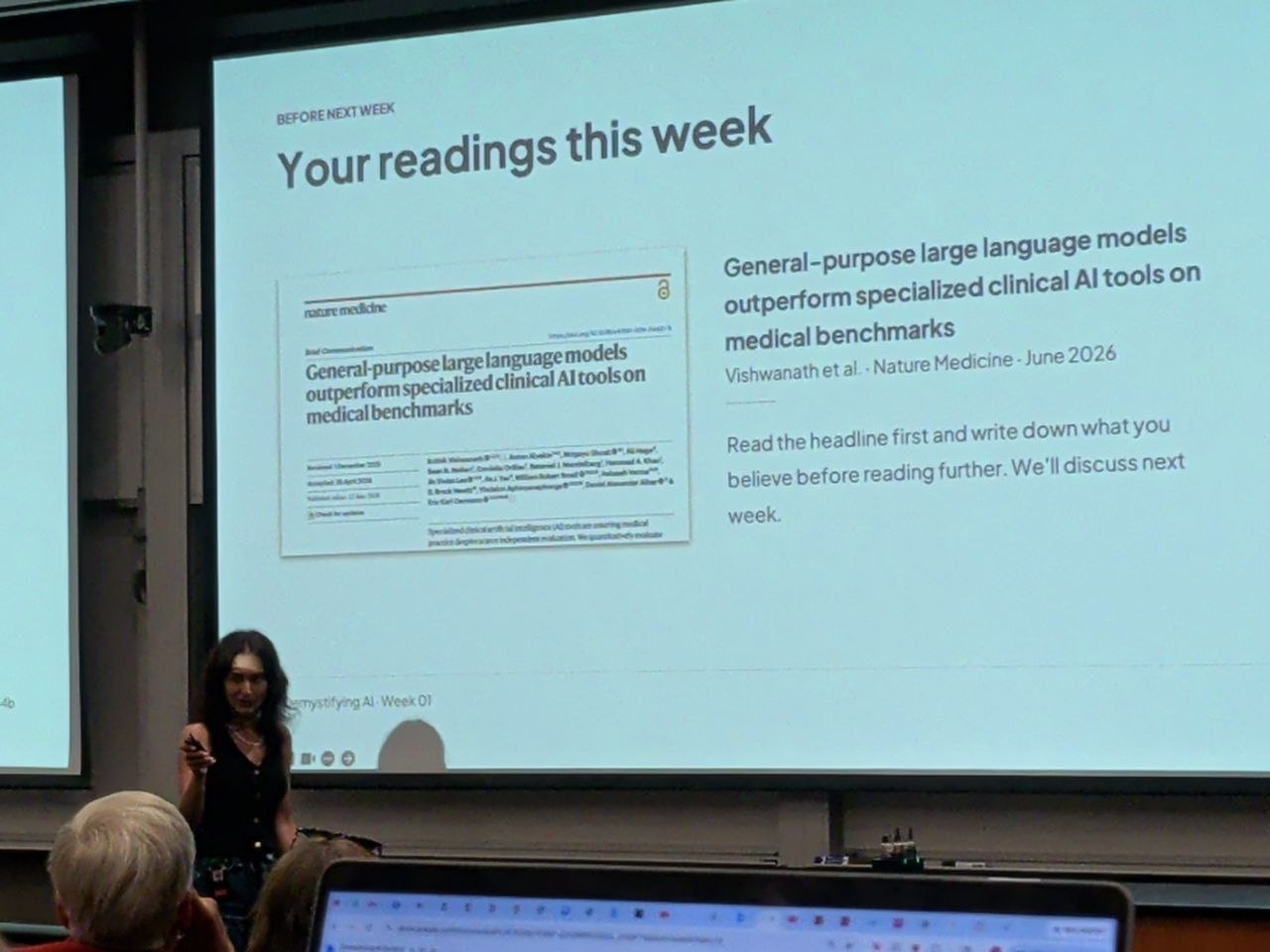
The assigned paper was a real one — *General-purpose large language models outperform specialized clinical AI tools on medical benchmarks* (Vishwanath et al., Nature Medicine, June 2026). But the instruction underneath it is what made the room lean in:
> Read the headline first and write down what you believe before reading further. We'll discuss next week.
Predict before you read. Commit to a belief, on paper, and *then* let the evidence confirm or break it. It's a small move with a big effect — it turns passive reading into an actual test of your own model of the world. You find out where your intuitions about AI are right, and where they quietly aren't.
That's the same discipline we push in our own workshops: form a hypothesis, then go check it against what actually runs. Seeing it taught explicitly, in a university classroom, was a good reminder that the fundamentals of *how to think* about this technology matter as much as the technology itself.
The Takeaway
The result Vishwanath et al. point at is worth sitting with on its own — general-purpose models holding their own against, and beating, specialized clinical tools is a real signal about where the field is heading. But the lasting lesson from the session was the method, not the headline.
A genuinely engaging class. Demystifying AI is doing the unglamorous, important work — making sure the people entering this field understand it from the ground up rather than from the marketing down.
More from the field soon.